

Why Most Churches Never Grow Past 75 People (And What to Do About It) | Stan Gleason
What's subtly wearing you out? Free self-assessment for ministry leaders: https://www.ryanfranklin.org/clselfassessment
Join Christian Leader® Community Coaching: https://www.ryanfranklin.org/communitycoaching
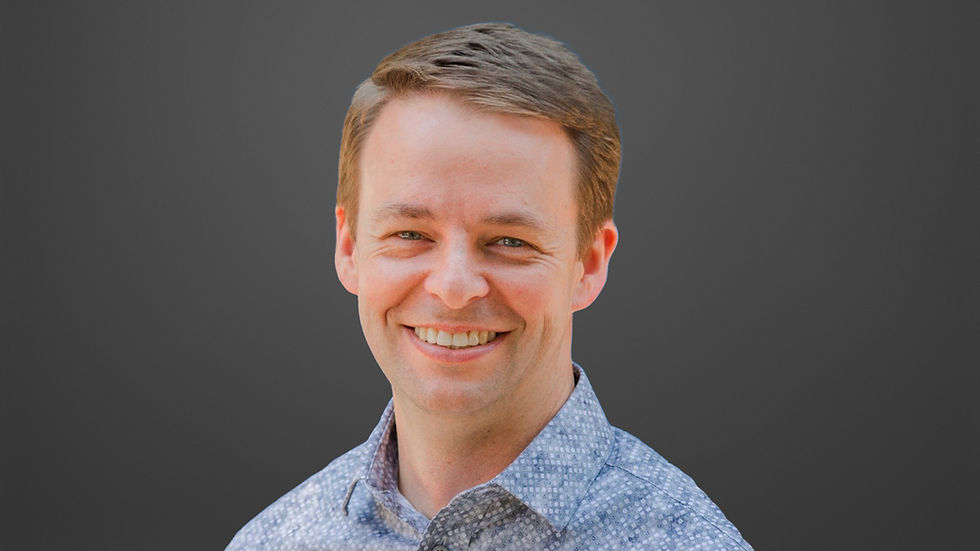
Most churches plateau at 75 people, and the reason might surprise you. In this episode, Ryan Franklin sits down with Stan Gleason, Assistant General Superintendent of the UPCI, bishop of The Life Church of Kansas City, and author of The Priesthood of the Believers, to talk about what it actually looks like to break through that ceiling. Bishop Gleason makes a compelling case that the key to church growth isn't a better program or a bigger budget. It's releasing the saints to do the work of the ministry. If you're a pastor or church leader ready to stop being the bottleneck, this conversation is for you.
Purchase Bishop Stan Gleason’s books:
The Priesthood of the Believers: https://pentecostalpublishing.com/products/the-priesthood-of-the-belivers
Follow to Lead: https://pentecostalpublishing.com/products/follow-to-lead-the-journey-of-a-disciple-maker
The Unflawed Leader: https://pentecostalpublishing.com/products/the-unflawed-leader-creating-a-culture-of-christlike-wellness-in-the-local-church
Purchase Christian Leader Sight Planner (a tool that has drastically changed Ryan’s productivity):
Black Cover – https://amzn.to/3JpBHvm
Blue Cover – https://amzn.to/4ouFRB9
Green Cover – https://amzn.to/4oXVLUr
Purchase The Christian Leader Blueprint book today:
Connect with Ryan:
Email: info@ryanfranklin.org
Facebook: https://www.facebook.com/rnfranklin/
Instagram: https://www.instagram.com/rnfranklin/
Linkedin: https://www.linkedin.com/in/rnfranklin/
Website: https://www.ryanfranklin.org
Audio mastering by Apostolic Audio:
#leadership, #thoughtleadership, #ministry, #pastor, #pastors, #churches, #leadershiptraining, #churchleader, #churchleaders, #influence, #leadershipdevelopment, #coaching, #executivecoach, #leadershipcoaching, #productivitycoach, #productivity, #growthmindset, #theproductiveleader, #ChristianLeader, #ChristianLeadership, #LeadershipPodcast, #FaithAndBusiness, #PodcastInterview, #ChristianEntrepreneurship, #KingdomImpact, #PodcastInspiration, #LeadershipJourney, #PurposeDriven, #ChristianPodcast, #LeadershipEssentials, #LeadershipFundamentals
Transcript
Welcome to the Christian Leader Made Simple show. My name is Ryan Franklin. Here's a question that I want you to sit with for a second: What if the biggest barrier to your church's growth isn't your location or your budget or even your vision? What if your greatest barrier is that you're still trying to do most of the ministry yourself?
You know, most pastors have heard the statistic: The average American congregation sits around 75 people and it stays there—not because the pastor isn't gifted, not because the people aren't good—but maybe it could be because the model has a built-in ceiling, and that ceiling could be the pastor.
Today's guest has spent decades thinking about what it actually looks like to break through that ceiling. Stan Gleason is Bishop of the Life Church of Kansas City and currently serves as Assistant General Superintendent of the UPCI Western Zone. He's the author of multiple books, including a book that we're going to be unpacking today, *The Priesthood of Believers*. He writes and leads from the conviction that the Saints aren't just attendees; they are actually ministry partners. Releasing the Saints is the key to everything.
So Brother Gleason, welcome to the show.
Thank you, Ryan. It's a pleasure, honor, and privilege to be with you and to have a few minutes together to talk about kingdom things that are going to make a difference in our world today.
Absolutely. And one of our favorite topics when we get together is leadership. This is very much a leadership topic in the church. You know this starts with your own story as a pastor—you've pastored for many years. Was there a moment early in your ministry when you realized that the way you were leading had a ceiling on it? And what did that look like for you?
Yes. Through the years, I've attended conferences and read books; I've tried to study leadership throughout my entire pastoral life spanning 40 years because I think leadership is key to everything.
When we came to Kansas City, we had come from a church we served for five years that doubled—from 50 to 100. My vision back then was limited; I felt like I might pastor several churches throughout my career—going into churches that were depressed or discouraged with room to grow their sanctuaries—and help them grow, max out that sanctuary, then move on.
I was intimidated about construction—I didn't know how to build something or relocate—so I thought I'd just go somewhere where attendance was down, build it up, bring in the next guy, then move on.
The first church we did this with was helped by the Lord; at our second church start, I remember our Sunday school superintendent told me after our first Sunday service we had 89 people—that was my starting point.
I attended a conference where one speaker said: The average sized church in America is 75 because you can survive at 75. He explained how church planters might start small but hit a ceiling at around 75 people because at that size pastors can do everything themselves—hospital calls, preaching, teaching Bible studies—even cleaning bathrooms or shoveling snow if needed.
He called it being a one-stop shop—a one-man band—and that's why many churches plateau at 75.
I also listened to Chester Wright speak about *The Missing Half of The Church*, which talked about releasing saints through small group ministry as essential for explosive multiplication.
That was my revelation moment—back in 1986—when I realized decentralizing pastoral care through small groups met needs more effectively.
At that time, I pastored an extremely traditional church where they hadn't baptized anyone in two years when we arrived; we baptized 16 people in three months.
However, this caused conflict because some resisted change—they feared losing control of the church—and they wanted only three cute sermons each week followed by lunch.
I knew decentralization wouldn’t happen there easily; after five years doubling attendance and evangelizing for several months, we moved on to Kansas City where there was great alignment between us and the congregation.
Then over time we began decentralizing control and ministry by sharing responsibilities with qualified saints in small groups.
Our church had been in decline before we arrived—morale was low; no money was available; building was paid off but in bad repair; men were good but undeveloped; women were leading mostly—and these things were obvious.
Following Brother Tenney’s advice ("if you're going to move the piano...move it one inch at a time"), for about one or two years I preached revival and healing messages focused on believing in God, ourselves, and our future.
Then I started *Community Prayer Reach* (CPR), subdividing into small groups across Kansas City metro—12 or 14 groups meeting weekly for prayer led by trained leaders following agendas including big agenda items plus local prayer requests—for an hour each week over one year.
We grew accustomed to community fellowship in homes with spiritual experiences before moving on to training leaders for home fellowship groups (cell group model).
We connected with leaders like Pastor Larry Stockstill who pioneered small group ministry; at one point we had about 35 groups with more people attending groups than Sunday morning services.
Within roughly two years of starting CPR, while praying alone in sanctuary averaging about 125 attendees (up from 89), God spoke permission for us to reach 250—a sign that leadership capacity expanded and growth would follow accordingly.
I learned then that congregation size reflects leader size—but with caveats: some pastors are called faithfully to smaller flocks; others have different measures of success based on God’s calling.
After reaching sanctuary capacity at around 270 seats (80% occupancy rule), numbers fluctuated somewhat but growth required more chairs temporarily as we adjusted.
You mentioned investing in yourself through conferences and reading books—I also joined John Maxwell’s Enjoy Life Club early on receiving monthly tapes packed with practical leadership tools which I used immediately in meetings.
Initially I invited anyone interested into leadership development but found some attended without commitment; later I handpicked those whom God directed me toward for deeper investment—meeting Sunday mornings before services from 8-9:30 am despite long days—to build relational equity alongside biblical training.
One memorable moment involved seeing a burly man crying openly during training expressing deep loyalty by saying “Pastor, I’d take a bullet for you,” reminiscent of David’s elite warriors—a powerful indicator of relational commitment beyond mere content delivery.
You are truly an example of relational leadership—it permeates your approach deeply—which is essential alongside structure and content for sustainable leader development.
Let’s dig into Scripture now—Acts chapter 6 describes apostles ordaining seven deacons as an important leadership move when ministry demands exceeded their capacity—they chose men full of honest report (good reputation), full of Holy Ghost (Spirit-controlled), full of wisdom—to serve tables so apostles could focus on prayer and ministry of Word only they could do—not delegable tasks—thus decentralizing practical care while maintaining apostolic focus on spiritual leadership.
This model fosters multiplication as word increases disciples multiply greatly resulting in many obedient priests (saints) serving effectively beyond initial core leaders.
Pastors must experience “noble discontentment” when growth stalls—a painful realization prompting new strategies such as decentralized ministry empowering qualified saints rather than guarding turf out of insecurity or desire for validation which ultimately limits church potential.
Failure to decentralize often leads churches either stagnating under single-leader load or ministries getting done but only by select few chosen by default rather than broad equipping per Ephesians 4:11-12 which calls apostles, prophets, evangelists, pastors-teachers “to equip saints for work of spiritual ministry.”
Some pastors mistakenly believe only they can perform spiritual acts like praying for sick or baptizing but biblical examples show believers empowered broadly including Ananias baptizing Paul (Acts 9) indicating shared spiritual responsibility among faithful saints qualified per First Timothy chapter 3 criteria paralleling elders (bishops) and deacons qualifications emphasizing character over function distinction—the main difference being calling versus gifting within body functions.
When pastors genuinely believe in their saints—as you mention—you release authority without losing affirmation but often gain multiplied fruitfulness filling your tank emotionally/spiritually by witnessing God work through others beyond yourself—a reflection of Philippians 2:5 attitude embodying Christ’s humility who increased while He decreased avoiding territorialism for kingdom expansion purposes.
Discipleship culture grows through four steps:
1. Model behavior yourself consistently—including casting clear vision creatively so everyone understands mission.
2. Place expectations on paid/unpaid staff holding accountability during meetings asking specifically “What are you doing making disciples?”
3. Provide regular training teaching others how you disciple.
4. Let people share their stories publicly encouraging participation thus inspiring wider engagement showing real-life impact beyond theoretical talk—often via short videos accessible online enhancing motivation especially among traditionally passive attendees realizing “If Bill can do it…so can I!”
Vision leaks over time so consistent monthly reminders creatively presented keep momentum alive rather than relying solely on annual themes or single sermons sustaining long-term transformation efforts within congregations.
In practice discipling individuals who become board members, missionaries or licensed ministers elevates overall challenge requiring leader elevation continually seeking next level growth opportunities fulfilling Acts 1:8 call empowering local believers as witnesses starting Jerusalem extending regionally globally—church growth means exporting leaders equipped personally even if losing best ones geographically knowing greater kingdom impact arises from releasing them fully rather than hoarding control locally—as exemplified by Cantrells’ journey from local discipleship into regional missions leadership today continuing legacy fruitfulness beyond initial context reflecting Jesus’ own pattern training twelve disciples preparing them for global mission despite risks including betrayal/pain knowing ultimate trust rests in God’s plan not personal security fears common among pastors controlling too tightly limiting multiplication potential akin to Barnabas willingly elevating Paul despite personal status changes demonstrating kingdom-first attitude critical for healthy leader development cycles expanding impact exponentially rather than shrinking influence due solely personal insecurities or control desires—the *unflawed leader* embraces trust releasing authority confidently modeled after Christ’s servant-leadership example enabling widespread disciple-making culture thriving across generations worldwide regardless of resources available compared historically when early Christians accomplished extraordinary expansion relying solely on faith-driven decentralized witness empowered by Spirit not institutional structures alone reminding us today campuses don’t make churches—the people do wherever they go embodying priesthood calling multiplying exponentially far beyond physical buildings alone.*
If you'd like more info or want *The Priesthood of Believers* book—which offers deeper insights—it’s available through Pentecostal Publishing House or Amazon along with other helpful titles such as *Follow The Lead* and *The Unflawed Leader* which complement these teachings well—I’ll include links in show notes for all recommended resources!
Thank you so much for joining us today Brother Gleason—it’s been an absolute pleasure hearing your wisdom rooted deeply both biblically and practically—I admire your heart and celebrate what God continues doing through you! May God bless your new assignment richly as He uses you globally impacting countless lives through faithful leadership release principles shared here!
And thank you all listeners for tuning into Christian Leader Made Simple podcast—I’m Ryan Franklin wishing you clarity, confidence & balance as you lead God's people effectively! God bless!
Copyright © 2026 Ryan Franklin. All rights reserved.


Comments